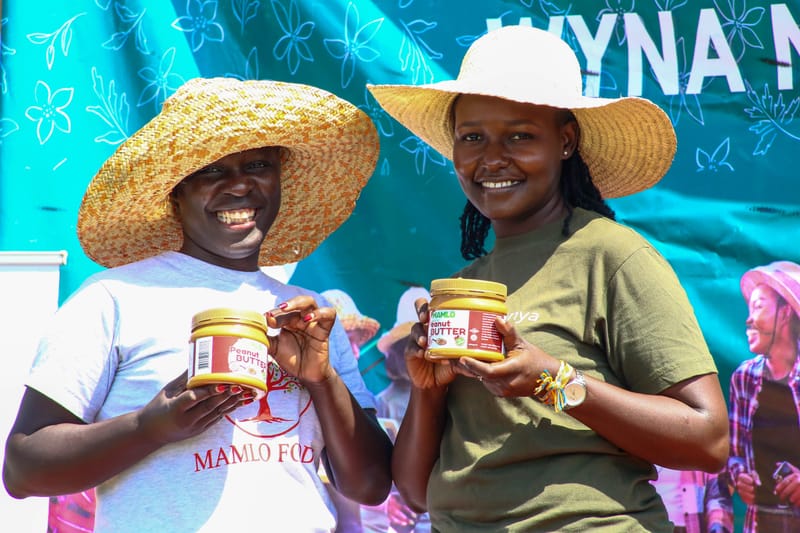
Proximate Micro-Factories Power Rural Food Economies


Local processing. Local ownership. Scalable impact.

Food systems are centralized. Farmers carry the cost.
Across Africa, most crops leave rural communities unprocessed.
Farmers sell raw harvests at low prices. Value is created far away.
Post-harvest losses remain high. 
Rural jobs are limited.Communities that grow food are often the last to benefit from it.

This is not a production problem.

It is an infrastructure problem.
Micro-Factories Change Where Value is Created
 We build standardized micro-factories located inside farming communities.
Each unit transforms crops into safe, high-value products close to where they are grown keeping income, jobs, and opportunity local.

Micro-factories are:
• Replicable
• Operated by local entrepreneurs
• Designed for consistent quality and safety
• Connected through MAMLO’s digital operating system

A distributed infrastructure network built for scale.
HOW IT WORKS
1. Farmers supply locally
Crops are aggregated and purchased at fair, stable prices.

2. Micro-factories process near the farm
Raw harvest becomes safe, high-value food products.

3. CORE ensures quality and traceability
Every unit runs on a shared digital operating system.

4. Markets receive consistent supply
Buyers access reliable, traceable food.

5. Income stays in the community
Value is retained where food is grown.

 
0%
 
0%
 
0
 
0%
 
0+
We measure success by sustained income growth for rural families.
We are building the Future of Rural Food Systems
MAMLO was created to solve a structural gap in food systems

Processing is centralized.
Risk is decentralized.
Farmers absorb the shock.

Micro-factories rebalance the system.They allow communities to own the value chain, strengthen local economies, and build long-term resilience.
Food that builds Communities
Scaling Requires Partnership
Micro-factories scale through collaboration.

Let's strengthen rural economies
Become a Partner

  • Kisumu, Kenya
  • Tom Mboya Estate